When parents search for screen-free activity book ideas for kids, they usually are not looking for a perfect digital detox plan. They are looking for practical ideas that work on ordinary days. That might mean filling twenty minutes after school, keeping a child busy during travel, reducing evening screen time, or finding something meaningful to do on a rainy weekend. The best screen-free ideas are the ones children can start quickly and return to without resistance.
Activity books are useful here because they already provide structure. Instead of inventing a craft, gathering supplies, or planning a full lesson, a parent can open the book and begin. But the strongest screen-free activity ideas go one step further: they turn the book into a small experience. That can mean pairing a story with a maze, adding a printable page after reading, or using prompts that invite the child to talk, notice, and imagine.
Why screen-free activities still win
Children often need different kinds of stimulation throughout the day. Screens can be entertaining, but they are not always the best fit for winding down, practicing focus, or creating a calm shared moment. Screen-free activities slow the pace. They allow children to move through a task at their own speed, ask questions, and revisit the same page or prompt without pressure. That shift can be especially useful before bedtime, during transitions, or any time a child feels overstimulated.
- Use a coloring page after outdoor play to create a quiet transition indoors.
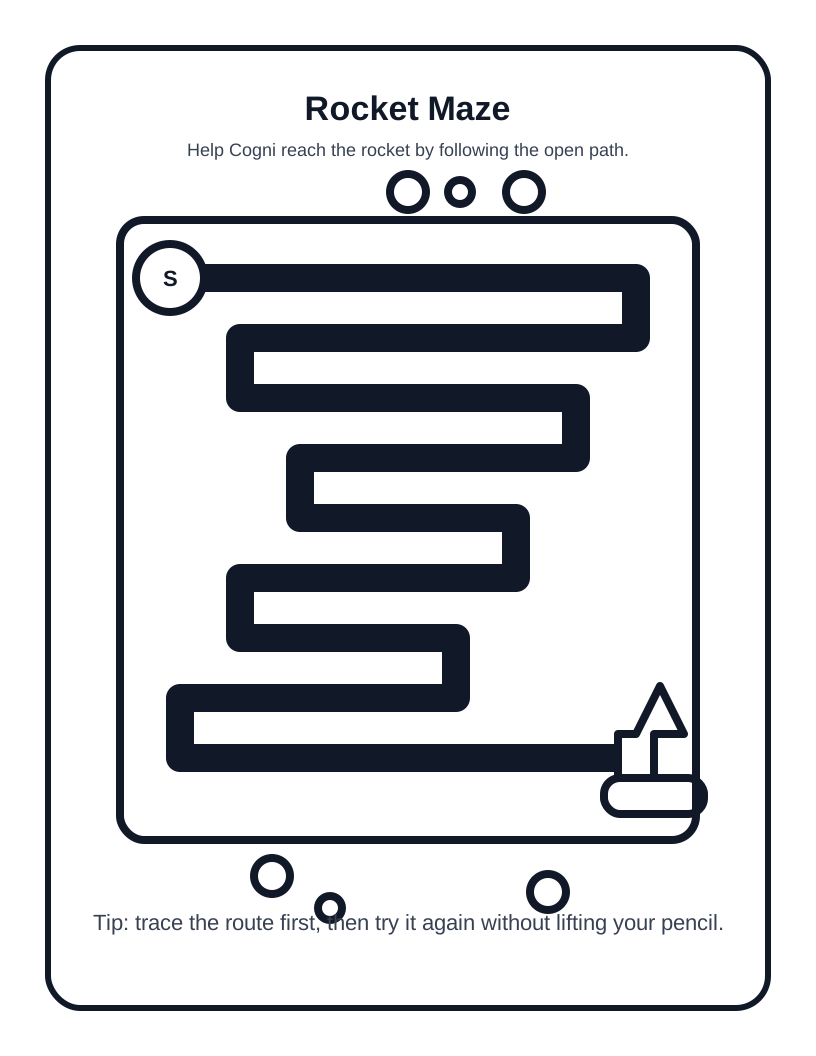
- Pair one short story with one maze or tracing page instead of offering a long block of tasks.
- Let children retell the story using printable sequence cards or picture prompts.
- Set up a simple activity station with crayons, scissors, and a few saved printables.
- Rotate the pages weekly so the materials feel fresh without adding complexity.
Turn an activity book into a repeatable routine
The most effective routines are small. Families do not need an hour-long enrichment block for activity books to work. Five to fifteen minutes is enough if the materials are accessible and the child knows what to expect. One simple formula is: open the book, read a short section, finish one activity, then stop while the child still wants more. That keeps the routine positive and makes it easier to repeat tomorrow.
Easy screen-free activity book ideas to try this week
- Morning start: one quick page before breakfast while the house is still quiet.
- After-school reset: a maze or coloring page before snacks and homework.
- Travel backup: three printed pages clipped together with a small pack of crayons.
- Bedtime wind-down: one story section and one calm observation prompt.
- Sibling version: let one child read or narrate while another colors or traces.
- Weekend extension: print an extra activity page that matches the story theme.
How Cogni supports screen-optional play
Cogni's Adventures fits this need because it starts with the physical book. The story is the anchor. Activity moments and printable extensions give children something active to do without forcing families into a purely worksheet-based format. That makes it easier to use the book in flexible ways: as part of storytime, as a calm activity before dinner, or as a backup for moments when a parent wants something engaging but not highly stimulating.
This screen-optional approach is especially useful for parents who are not anti-technology but still want stronger boundaries. They can begin with the physical book and printable pages, then decide later whether to extend the experience digitally. In practice, that gives families more control and makes the activity book easier to fit into real life.
Choose ideas that are easy to repeat
The right screen-free activity is not the most impressive idea on social media. It is the idea your child will actually do again tomorrow. That usually means simple materials, manageable difficulty, and some emotional connection to the activity. Story-based books and printable pages work well because they already provide that connection. The child is not facing a blank page. They are entering a familiar world.
Common Obstacles and How to Work Around Them
Most families don't fail at screen-free time because the ideas are bad — they fail because of small friction points that make the activity harder to start than opening an app. Recognizing these obstacles ahead of time makes it much easier to actually follow through on a screen-free routine.
- Obstacle: materials aren't ready. Fix: keep a small pre-printed stack of pages and a few crayons in one easy-to-reach spot.
- Obstacle: the activity feels too long to start. Fix: default to a single page or a five-minute version instead of a full session.
- Obstacle: siblings want different things. Fix: offer parallel activities from the same book, like one page to color and one to trace.
- Obstacle: the child says they're bored after one try. Fix: rotate in a printable extension or a new story section rather than repeating the exact same page.
Frequently Asked Questions
What are the best screen-free activities for ages 4 to 7?
Coloring, tracing, mazes, story prompts, sequencing cards, and simple puzzle pages are all strong options because they are easy to start and easy to repeat.
Can an activity book replace screen time after school?
It can work well as a transition tool, especially when the routine is short and low-pressure. Many children respond well to one story section and one simple page.
Why do story-based activity books work for screen-free play?
The story gives children a reason to care about the activity, which makes it easier to hold attention than disconnected worksheets or random tasks.
What if my child asks for a screen right after finishing an activity page?
That's common and not a sign of failure. Screen-free activities work best as part of a routine rather than a strict replacement — over time, extending the activity slightly before offering a screen tends to reduce how often this happens.