Choosing an activity book for kids seems easy until you realize how many options are on the market. Some books focus on tracing. Some are puzzle-heavy. Some are basically workbooks with brighter covers. Others blend stories, games, and creative prompts. That range can be helpful, but it also makes it easy to buy the wrong format for your child. The best choice is rarely the book with the most pages. It is the one that fits your child's age, attention span, and the way your family actually uses books at home.
Parents usually get better results when they start with the child rather than the category. Ask how long your child can stay with a page, whether they enjoy coloring or problem solving, and whether they respond better to open-ended creativity or guided prompts. A child who loves stories may thrive with a narrative-based activity book. A child who likes quick wins may prefer simple mazes, matching, and visual search. Once you know that, the right kind of activity book becomes easier to identify.
Start with age and attention span
Age labels are useful, but they are only a starting point. Two children the same age can respond very differently to the same book. One 5-year-old might love sequencing cards and multi-step prompts, while another prefers coloring and short tracing pages. That is why attention span often matters as much as the number on the cover.
- For ages 3 to 4, look for large shapes, simple tracing, coloring, and visual matching.
- For ages 4 to 6, look for varied formats such as mazes, observation, storytelling, and gentle logic.
- For ages 6 to 8, look for books with more independence, sequencing, and room for discussion or problem solving.
- If your child tires quickly, avoid books that require long written answers or dense page layouts.
Match the format to your goal
Parents buy activity books for different reasons. Some want quiet time. Some want educational support. Some want a travel resource. Others want a gift that feels more substantial than a standard coloring book. Once your goal is clear, you can evaluate formats more effectively.
- Choose workbook-style books if your goal is repeated skill practice on one narrow area.
- Choose story-based activity books if your goal is engagement, shared reading, and imaginative play.
- Choose printable-friendly ecosystems if your child often finishes pages quickly and wants more.
- Choose themed books when you need a gift or a stronger emotional hook than isolated tasks can provide.
Look for quality signals before you buy
A good activity book usually reveals its quality quickly. The pages feel intentional. The instructions are clear. The activities are varied without becoming chaotic. Most importantly, the child can experience success without the adult having to rescue every page. These signals matter more than marketing phrases like 'educational' or 'brain boosting,' which appear on almost every product in the category.
- A clear visual hierarchy and enough white space on the page.
- A mix of guided tasks and open-ended creativity.
- Themes or characters that make the activities feel connected.
- Realistic age targeting instead of broad labels that try to cover everyone.
- A reason to revisit the book, such as story context, discussion prompts, or printable extensions.
Where Cogni's Adventures fits
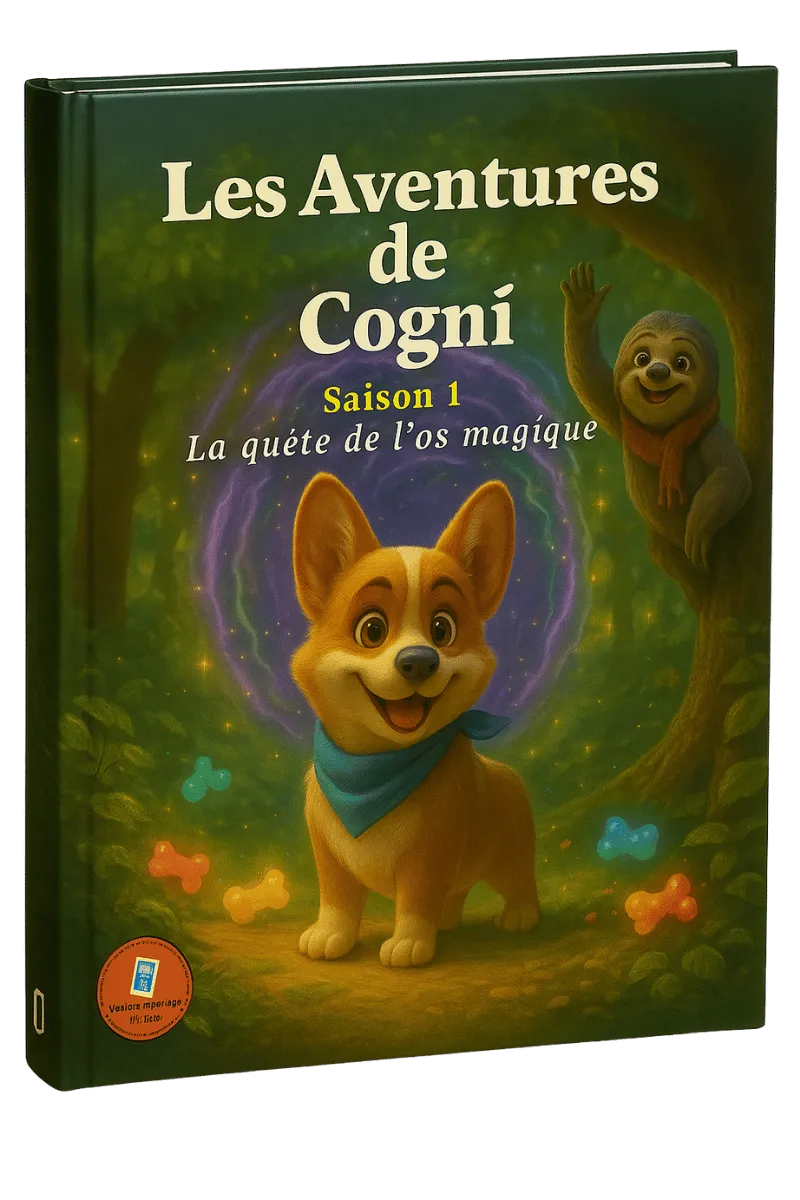
Cogni's Adventures is a good fit for families who want to combine reading and activities instead of choosing between them. The story gives children context. The activity moments support attention, imagination, and conversation. Printable pages make it easy to extend the experience without searching for new materials every time. This makes it especially useful for homes that want a flexible book they can use during storytime, quiet time, or as a gift.
If you are choosing between a generic workbook and a story-led children's activity book, think about what keeps your child returning to a book. If the answer is character, adventure, and the chance to participate, a book like Cogni will usually outperform a more repetitive format.
Questions to ask before you buy
A short mental checklist can save families from buying a book that ends up unused. Before purchasing, it helps to picture your specific child using the book rather than judging it in the abstract. A few direct questions tend to surface the right answer quickly.
- Would my child recognize themselves in this book's theme or characters?
- Can my child complete at least a few pages independently, or will every page need adult help?
- Does the book offer enough variety to last more than one or two sittings?
- Is there a natural way to extend the book later, such as printable pages or a related story?
- Does the price and page count match how often we'll realistically use it?
It's also worth thinking about how the book fits into your existing routine rather than evaluating it in isolation. A book that requires a lot of setup — scissors, glue, loose pieces to keep track of — may be a poor fit for a busy weekday but perfect for an unhurried weekend. Matching the format to your actual schedule, not just your child's age, is often the difference between a book that gets finished and one that stalls after a few pages.
Frequently Asked Questions
What should I look for in an activity book for a 5-year-old?
Look for variety, clear instructions, age-appropriate difficulty, and enough story or theme to keep the child emotionally engaged.
Are story-based activity books better than workbooks?
They can be better for engagement and repeat use, especially for children who respond strongly to characters, visuals, and shared reading.
How do I know if an activity book will actually get used?
Check whether the pages feel manageable, the activities vary, and the format matches how your child naturally likes to play and learn.
Should I buy an activity book based on age range alone?
Age range is a useful starting filter, but attention span and interests matter more. A book slightly below your child's age that they finish and enjoy is usually a better outcome than one above their level that goes unused.